ADA website lawsuits in 2025: the year in numbers
After two years of decline, website accessibility lawsuits in US federal courts rose again in 2025. Here is where the cases were filed and who was sued, from public statistics.
Seyfarth Shaw tracks website accessibility lawsuits filed in US federal courts each year. In 2025 there were 3,117, up 665 from 2,452 in 2024, an increase of about 27% that ends two years of decline.
Federal filings by year
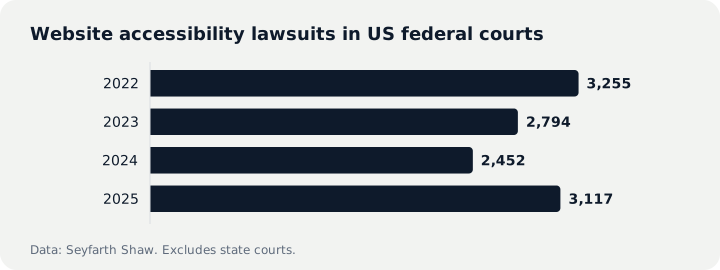
| Year | Federal filings | Change |
|---|---|---|
| 2022 | 3,255 | — |
| 2023 | 2,794 | -14% |
| 2024 | 2,452 | -12% |
| 2025 | 3,117 | +27% |
These counts exclude state courts. Seyfarth notes that plaintiffs have moved many cases to state courts in New York and New Jersey, partly because federal courts there have been stricter about standing. The federal number is a floor.
Where the cases were filed
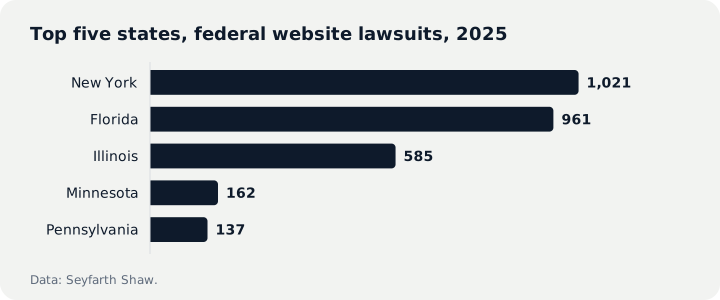
New York, Florida and Illinois together account for 2,567 cases, 82% of 2025 federal filings. That concentration reflects a small number of plaintiff firms filing in volume. Where you get sued is usually the plaintiff firm's choice of court, not yours.
Who was sued
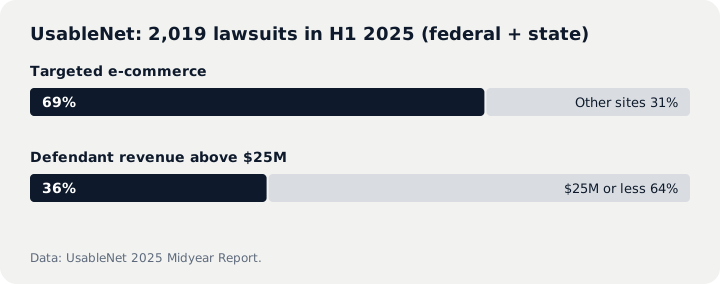
UsableNet, which counts federal and state courts together, recorded 2,019 lawsuits in the first half of 2025. 69% targeted e-commerce, and only 36% of defendants had annual revenue above $25 million. At the time UsableNet projected a roughly 20% increase for the full year over 2024.
What it means for online stores
- Any store selling to US consumers is in scope, including small ones.
- Plaintiff firms scan stores category by category, so check your own site when a competitor is sued.
- Complaints most often cite missing alt text, unnamed buttons and links, unlabelled fields and keyboard barriers. See product image alt text and the 10-minute keyboard test.
- Overlays are not a fix. In 2025 the FTC ordered accessiBe to pay $1 million over unsupported claims that its automated tool makes sites WCAG compliant.
What to watch in 2026
The DOJ's 2024 WCAG 2.1 AA rule for state and local governments under Title II had its deadlines pushed to 2027 and 2028 in April 2026. It covers public entities, not private business websites, but it makes WCAG 2.1 AA an even clearer benchmark. Lawsuits against private businesses continue under Title III.
If you receive a letter or complaint, talk to a US attorney first; for the technical side see what to do after an ADA demand letter. To see where your store stands, run the free accessibility test.
Questions
Do these numbers include demand letters?
No. They count lawsuits filed in court. Demand letters and pre-suit settlements are not public, so far more businesses receive letters than these numbers show.
Why do sources report different totals?
Seyfarth Shaw counts federal courts only; UsableNet counts federal and state courts. Compare trends within one source.
Can a company based outside the US be sued?
That is a question for a US attorney. Public dockets show that foreign-owned stores selling to US consumers are sued regularly.
Sources
- Seyfarth Shaw: Federal Court Website Accessibility Lawsuit Filings Bounce Back in 2025
- UsableNet 2025 Midyear Report press release: Digital Accessibility Lawsuits Surge in 2025
- Plante Moran: DOJ extends ADA Title II web accessibility compliance deadlines (April 2026)
- FTC (April 2025): FTC approves final order requiring accessiBe to pay $1 million
This article summarises technical requirements and public data. It is not legal advice; for legal obligations and lawsuits, consult a qualified attorney.