ADA website lawsuits in 2026: monthly tracker
Filings by month, state, platform and plaintiff firm, from the three public trackers. This page is updated each month as new figures are published.
Three trackers publish US website accessibility lawsuit counts during the year: EcomBack, UsableNet and the law firm Seyfarth Shaw. They use different court coverage and definitions, so this page keeps their figures apart. The latest data covers filings through August 2026 (EcomBack) and September 2026 (UsableNet).
| Tracker | Courts | Cases counted | Latest 2026 figure |
|---|---|---|---|
| EcomBack | Federal and state | Websites | 2,586 (January to August) |
| UsableNet | Federal, plus New York and California state courts | Websites, apps, video | About 6,176 projected for the full year |
| Seyfarth Shaw | Federal | All ADA Title III cases (websites and physical locations) | 5,006 in January to June |
Filings by month
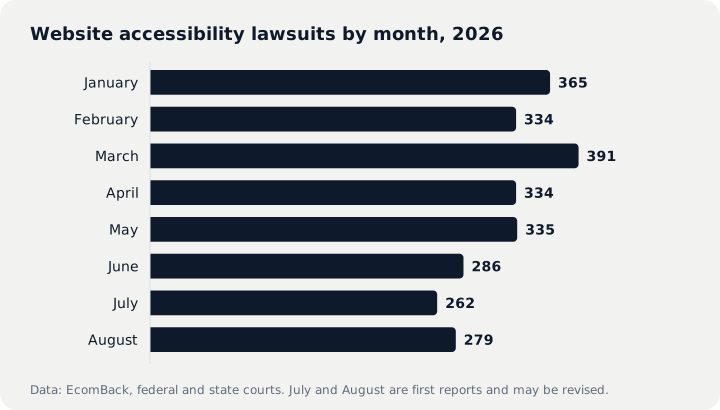
EcomBack's monthly counts of website lawsuits in federal and state courts. The January to June figures are the revised numbers from its mid-year report; July and August are first reports and are likely to be revised upward.
| Month (2026) | Lawsuits | Status |
|---|---|---|
| January | 365 | Revised |
| February | 334 | Revised |
| March | 391 | Revised |
| April | 334 | Revised |
| May | 335 | Revised |
| June | 286 | Revised |
| July | 262 | First report |
| August | 279 | First report |
| January to August | 2,586 | — |
The first half of 2026 totalled 2,045, up 1.54% from 2,014 in the first half of 2025. For comparison, EcomBack counted 3,948 for all of 2025. UsableNet, which uses a different scope, reported 360 lawsuits in September 2026; 78 of those defendants had been sued before and 91 were using a third-party accessibility widget.
Where the cases are filed
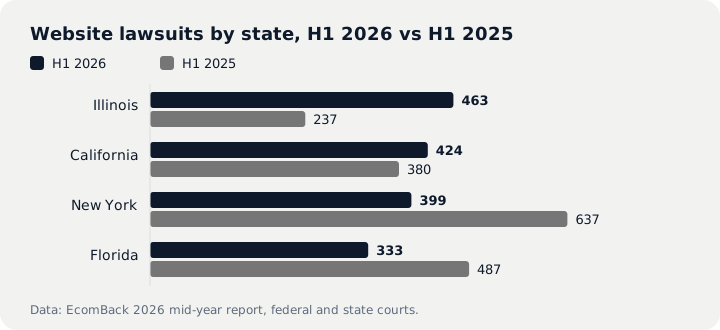
The main change in 2026 is Illinois. It moved to first place, while New York and Florida fell.
| State | H1 2026 | H1 2025 | Change |
|---|---|---|---|
| Illinois | 463 | 237 | +95% |
| California | 424 | 380 | +12% |
| New York | 399 | 637 | −37% |
| Florida | 333 | 487 | −32% |
| Minnesota | 120 | not reported | — |
| Indiana | 105 | 28 | +275% |
| Pennsylvania | 62 | not reported | — |
Seyfarth Shaw links the drop in New York federal filings to stricter review of standing by federal judges there, and notes that federal courts in California are declining to hear the state Unruh Act claims that usually accompany ADA claims. Both push cases toward state courts, which the federal-only counts do not include.
Platforms and widgets
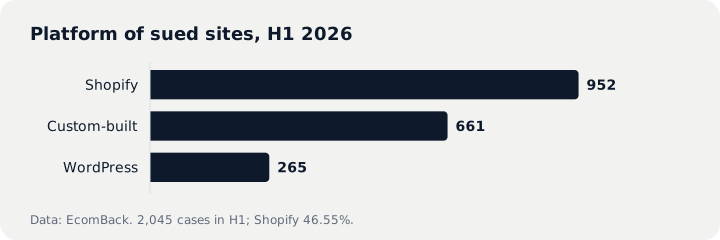
- Shopify stores were the most sued platform: 952 cases, 46.55% of the first half, up from 32.42% a year earlier. In August the share was 47.7%.
- Custom-built sites followed with 661 cases, then WordPress with 265.
- 496 cases (24.25%) were against sites that had an accessibility widget installed, up from 22.74%. In August the share was 27.6%.
The Shopify figure reflects how many stores run on Shopify and how plaintiff firms find targets, not a defect in the platform itself. Most issues cited in complaints come from the theme, apps and store content: images without alt text, buttons without names, form fields without labels and menus that do not work with a keyboard. Our guide to accessibility overlays covers why widgets do not resolve these.
Who files and who is sued
- The ten most active plaintiff firms filed 80.6% of first-half cases (EcomBack). Equal Access Law Group alone filed 526, or 25.7%, followed by Manning Law with 366.
- By industry, restaurants and food accounted for 29.0%, fashion and apparel 27.6%, and health, beauty and wellness 15.1%.
- UsableNet put e-commerce at 79% of its first-half cases. 68% of defendants had annual revenue under $50 million, and about a quarter of cases were against companies that had been sued before.
Legal and regulatory changes in 2026
- Utah (S.B. 68, effective May 6, 2026), Missouri (effective August 28, 2026) and Georgia (effective July 1, 2026) passed laws aimed at abusive website accessibility suits. Utah and Missouri use notice-and-cure periods; Georgia lets a defendant seek damages from the plaintiff and the plaintiff's attorney. These are state laws and do not stop a federal ADA Title III claim.
- The Department of Justice moved the deadlines of its WCAG 2.1 AA rule for state and local governments to April 2027 and April 2028. The rule covers public entities, not private online stores.
- Seyfarth Shaw's federal ADA Title III count for January to June 2026 was 5,006, up 9% and the highest first half since 2021. Its website-only count for 2026 is usually published in the first quarter of the following year.
Questions about how any of this applies to a specific business should go to a US attorney.
What it means for online stores
- Most defendants are small and mid-sized businesses. Being a small store or based outside the US does not keep a site out of these counts.
- Fashion, beauty and food are the most targeted categories, and Shopify is the most targeted platform. Stores in those groups should check their own site when competitors are sued.
- An installed widget is no sign of compliance; a quarter of defendants had one.
The issues named in complaints can be found with a basic test. See product image alt text and the 10-minute keyboard test, or run the free accessibility test on your store. If you receive a letter, see what to do after an ADA demand letter.
Update log
- October 18, 2026: first version, with EcomBack data through August and UsableNet data for September.
For the full 2025 figures, see ADA website lawsuits in 2025.
Questions
Why do the trackers report different totals?
They count different things. Seyfarth Shaw counts federal courts only and reports all ADA Title III cases in its mid-year post. UsableNet counts federal courts plus New York and California state courts, and includes apps and video. EcomBack counts website cases in federal and state courts. Compare trends within one tracker, not across them.
Do these numbers include demand letters?
No. They count lawsuits filed in court. Demand letters are not public; presenters at UsableNet's 2026 midyear webinar estimated them at two to three times the number of lawsuits.
Does installing an accessibility widget prevent lawsuits?
The data does not show that. EcomBack found an accessibility widget on 24.25% of sites sued in the first half of 2026. See our guide on accessibility overlays.
Why are recent months revised upward?
Court databases update with a delay, so first monthly reports undercount. EcomBack's first monthly reports for January to June added up to 1,917; the revised mid-year total is 2,045.
Sources
- EcomBack: 2026 Mid-Year ADA Website Lawsuit Report
- EcomBack: July 2026 ADA website lawsuit recap
- EcomBack: August 2026 ADA website lawsuit recap
- EcomBack: 2025 annual ADA website accessibility lawsuit report
- UsableNet: Inside the 2026 midyear numbers (July 8, 2026)
- UsableNet: ADA website compliance lawsuit tracker
- Seyfarth Shaw: 2026 Mid-Year Report, ADA Title III federal lawsuit numbers (Sept 9, 2026)
- Seyfarth Shaw: Federal court website accessibility lawsuit filings bounce back in 2025
- Federal Register: Extension of compliance dates, ADA Title II web accessibility rule (April 20, 2026)
- Utah Legislature: S.B. 68 (2026), enrolled text
- Seyfarth Shaw: Missouri passes law to deter abusive website litigation
- ADA Compliance Pros: State website accessibility cure statutes (July 2026)
This article summarises technical requirements and public data. It is not legal advice; for legal obligations and lawsuits, consult a qualified attorney.